 Back to all news
Reprinted from DUPLIN TIMES
October 23, 2025
Lauren Branch, Correspondent
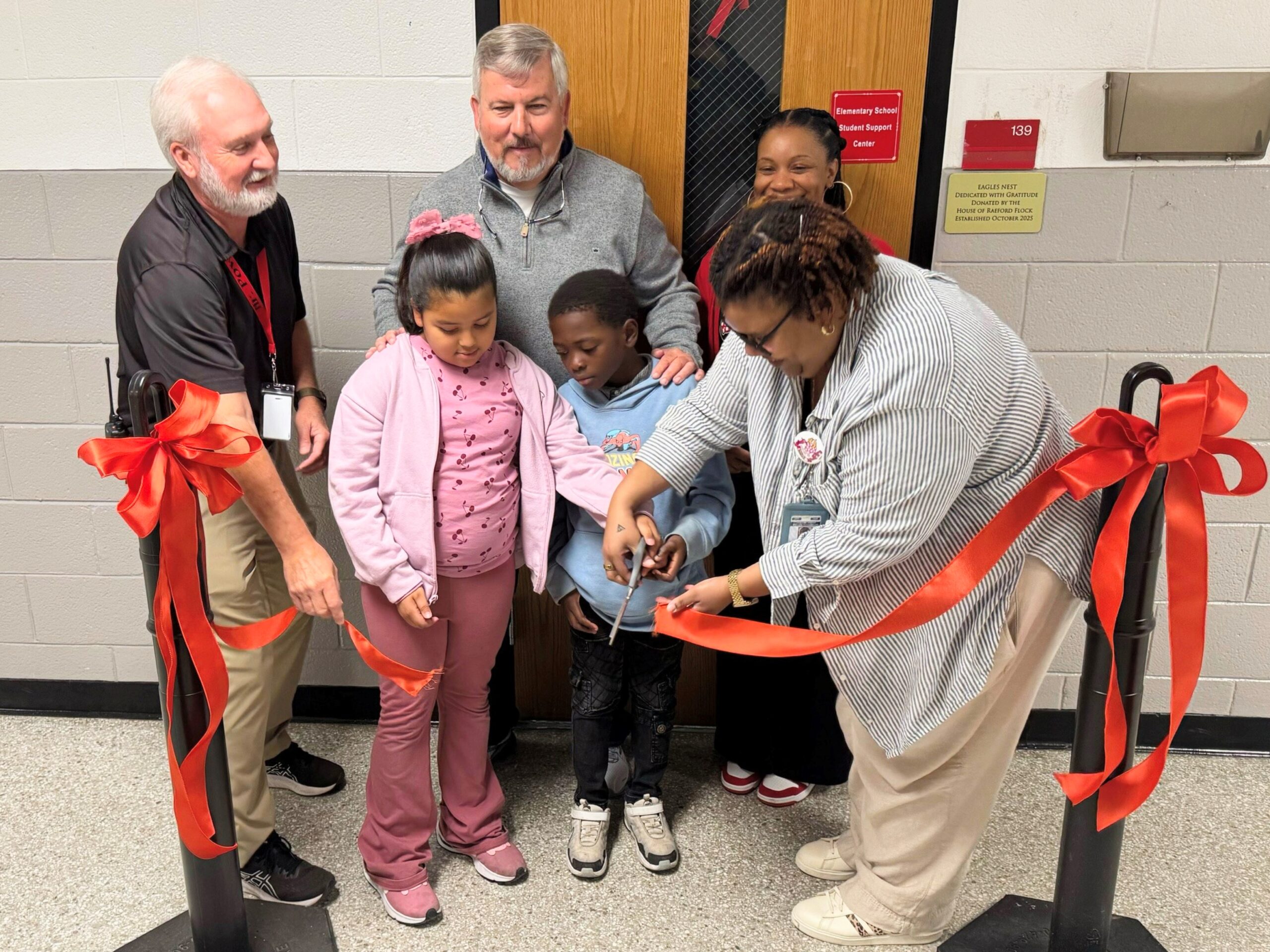
l-R: (Front Row) Cary Powers, Co-Principal; Kaylani Rosales; Jimmanuel Dudley; Janetta Judge, Middle School Counselor. (Back Row) Tom Teachey, House of Raeford; Shaquetta Hall, Elementary School Counselor.
Rose Hill, NC – Big changes are on the horizon at Rose Hill-Magnolia Elementary School (RHM), where administrators have partnered with The FLOCK Foundation of the House of Raeford to launch a new initiative aimed at improving student behavior.
A ribbon-cutting ceremony was held on Oct. 20 to mark the opening of the new de-escalation room at RHM. The room, called the Eagles Nest, is an initiative aimed at promoting better mental health and reducing behavioral issues in the school. Students and community leaders were able to do tours throughout the day.
According to Tom Teachey, Director of Community Outreach for the FLOCK Foundation of the House of Raeford, the company was already working with Duplin County Schools on mental health initiatives, but they felt there was still more that could be done.
“We have some kids in crisis in this county…we just decided as a board that outside of the resources that we were helping to supplement some mental health workers here in the county, that we could do more.”
Teachey explained that the idea to support the mental health of local youth was put into his heart, noting that some students may need medical intervention but most begin with concerns in their home life. Studies show that support is increasingly needed even in elementary schools.
“The numbers get smaller, but it’s still a large number for a county as small as we are. We just decided that there is a way to get kids down from a zone 10 to get them to a 2 where the people that are trained in this area like social workers, guidance counselors, administration can get inside these kids and see what’s going on. Because the majority of the problems are not school-driven. It’s home-driven,” Teachey said.
“While there is some bullying that takes place, most of the trauma and drama that these kids experience, they bring to school with them. So what better way to try to alleviate that than to try to find out and get them to open up and tell us what’s going on at home so that the appropriate people can address that to try to make it happen,” he continued.
RHM K-4 Counselor Shaquetta Hall stated that the students already love the room, and she is looking forward to seeing what impact the room has on the kids.
“I’m very excited about it because a lot of the students, you can tell they really enjoyed seeing the room yesterday, and they can tell you which space in the room that they like the most, so I am really looking forward to I guess get more students in there so they can show me how they can de-escalate themselves when they get back to class. As far as it being open now, I’ve only had two students who I’ve utilized the room with, and it was pretty good. They got to show me some of their creativity and build some stuff on that wall. I was like I don’t know how you did that, but I love it, and I’m getting ready to show everyone in this building. So I am excited to see what they are going to show me,” she said.
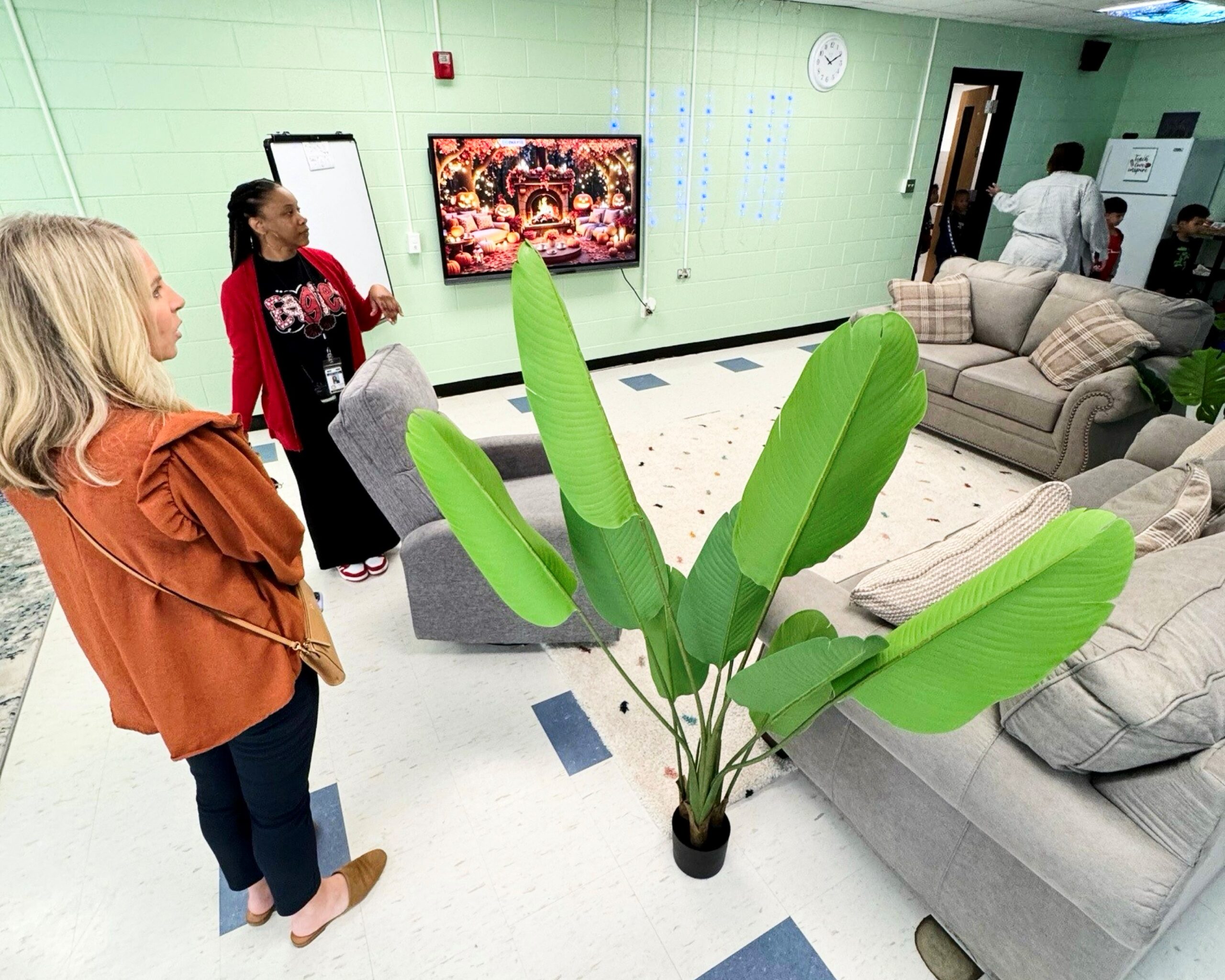
The room consists of seven areas: art, reading, relaxation couches, conference and counseling, STEM, games, and snacks. Each area is designed to be therapeutic, educational, and relaxing. Time in the game area can also be used as a reward for students. RHM administration had control of the design of the room, and they even made sure there was relaxing music and scents in the room.
“First thing we did was do some research on what others have done in their de-escalation rooms or their quiet rooms at their schools, and then we came up with the idea to have different spaces in there. From there, we went to Amazon and filled the room with things that would connect to those stations. So, when we thought about STEM and having a STEM area and what things would go over there we started building our stations. Then we thought about an art section, so you get all the things that are artsy. So that was the beginning process that we had, plus finding a room in this building that was big enough to house all of the things,” Hall explained.
During the tour, staff took students and guests to each area to explain some of the things that were in each section.
“In the STEM section, there are sensory items for them to touch to help them to regulate themselves, and we have the Lego wall and puzzles in that area. In the reading area, there are books, preferential seating for students to sit in different chairs on the floor, and we also have taller chairs for someone to come in to read to them. Then in the arts section, we have Play-Doh, canvases for painting, sketch books, puzzles to put together, and kinetic sand for them to play with. In the game area, we have the arcade basketball game, the 3-in-1 game table that has foosball, air hockey, and pool on one side. We have the giant Jenga and darts, and a giant tic-tac-toe game. We have some more ideas that we want to put in there. It’s coming,” Hall stated.
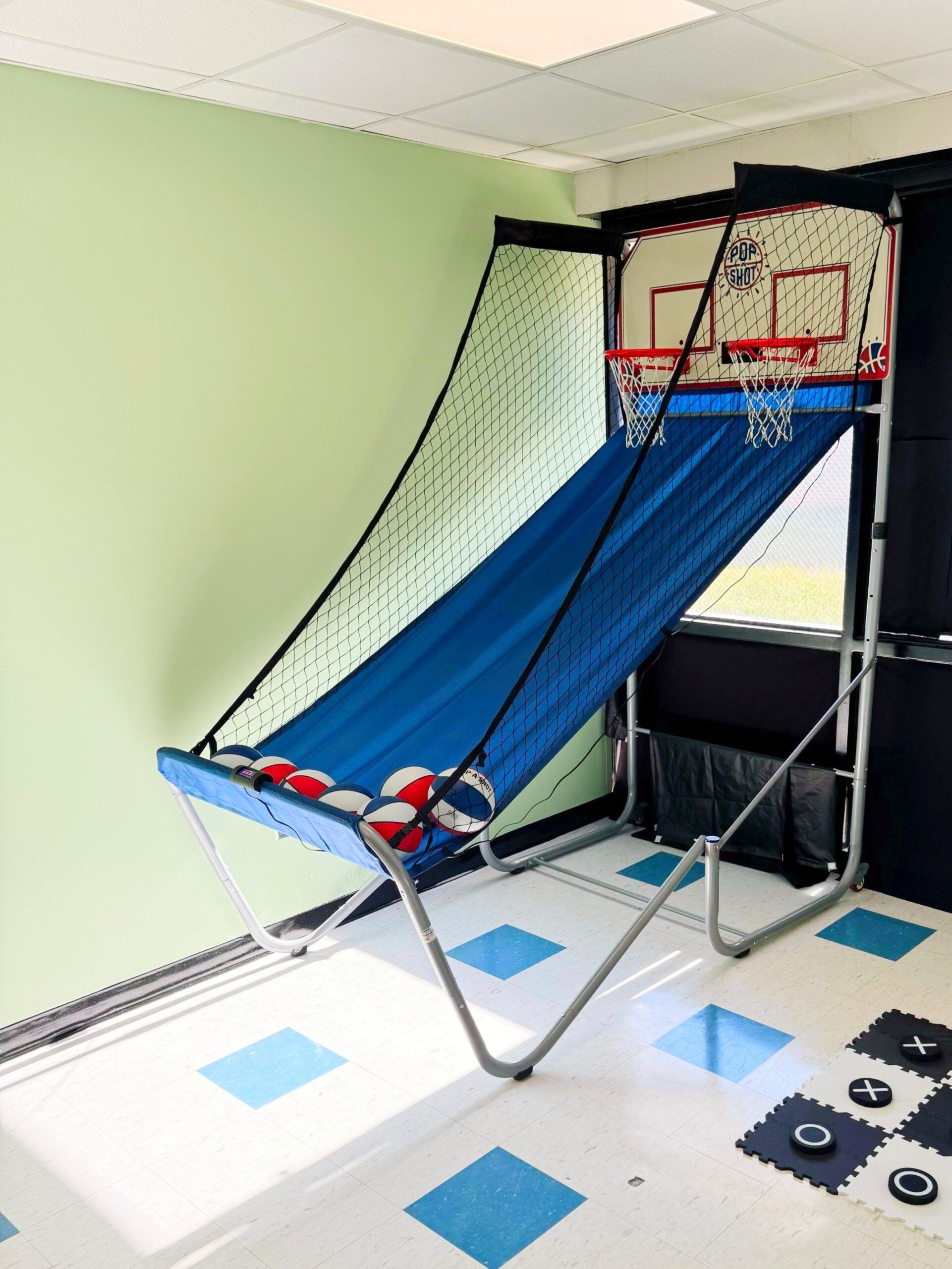
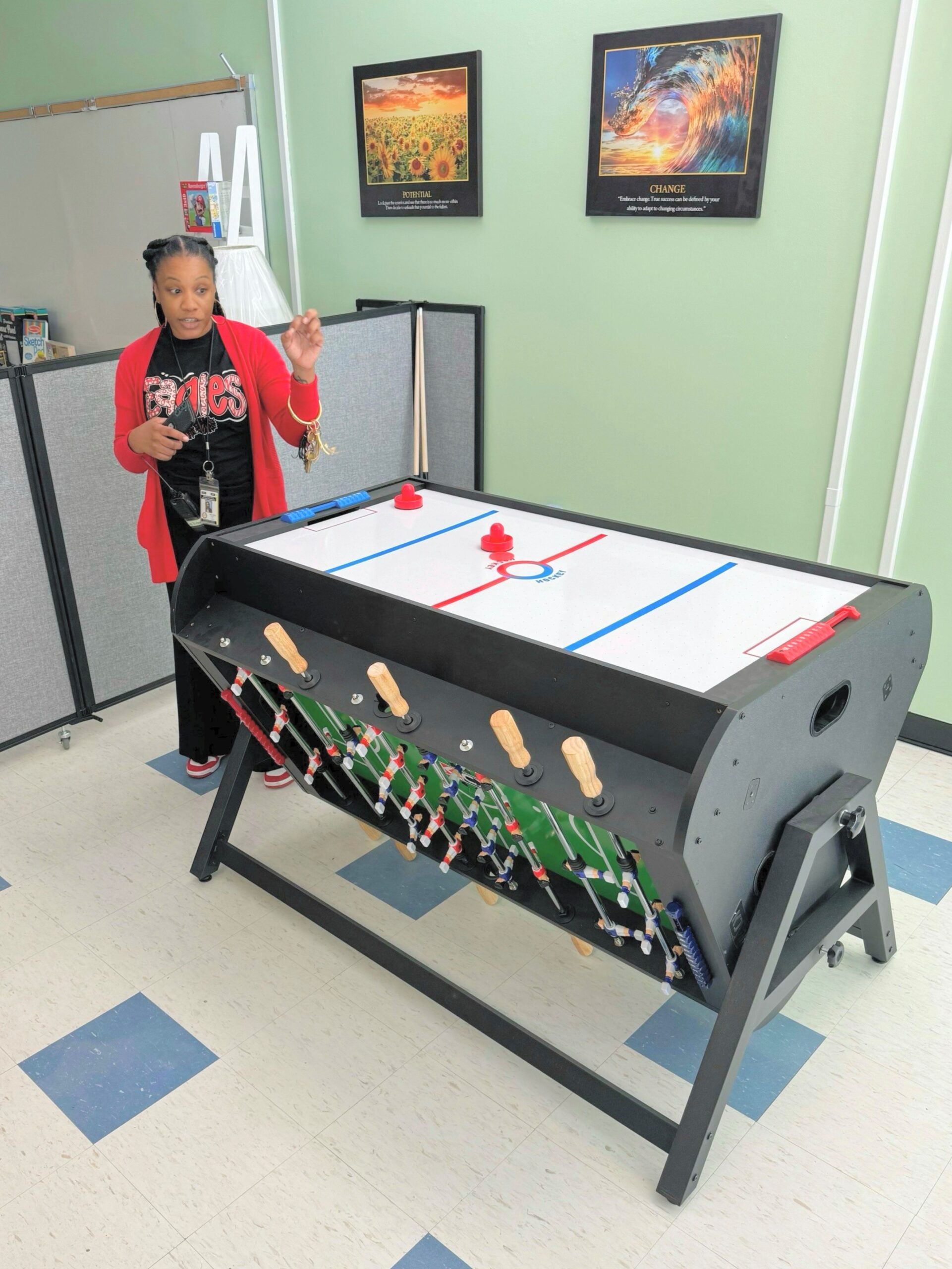
According to Hall, the RHM staff tried to make sure they utilized local resources when putting the room together, so they shopped for furniture and décor from places like Fredericks Furniture and Ollies.
Teachey also gave his input about how he was feeling about the launch of the de-escalation room. “Actually, I was here about a month ago when I saw about 60% of it done, and my heart skipped a beat when I came in. It’s even better than what I imagined,” he said tearfully.
“It’s multipurpose, and now today signifies us kind of passing the torch. FLOCK and the heart of FLOCK and our board were willing to invest the resources and cast the vision. Mr. Sherrill, myself, Mrs. Hall, and Mrs. Judge all got together, and we cast the vision, and now it’s up to the people to run with it…it’s so multipurpose. If you look around, there are facets of this room that will impact, because different kids are coming in with different baggage.
Some kids need help on the educational side, and some need help on the emotional side. We even have a spiritual aspect to this. They just need to know someone cares, and I think this room will help manifest that. They will know when they walk out of here that someone cares about them”.
Although RHM is the first school in Duplin County to implement the de-escalation room, the goal is for every school to eventually have one.
“This is, we hope, the first of several. Mrs. Knowles just left here; she is the principal over at Chinquapin. We reached out already to three people that we have communication with at other schools who said they want to jump on board. Now that I see it actually laid out, Mrs. Hall and Mrs. Judge did an amazing job. This is going to be a tool that is going to change kids’ lives,’ Teachey said.
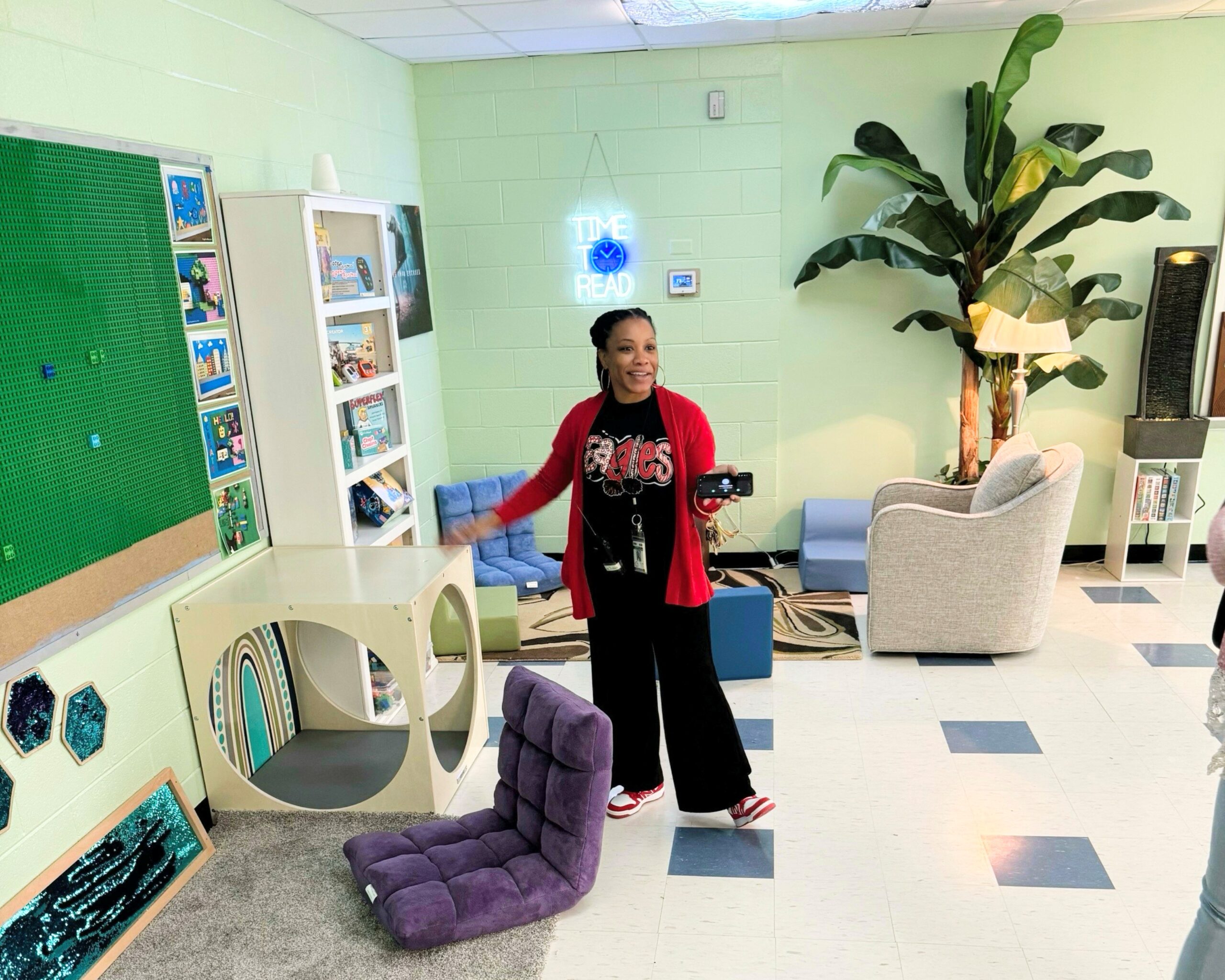
Both the RHM Staff and the House of Raeford FLOCK team believe that this new initiative is going to bring positive change to some of the mental health issues students face.
“I think it’s going to have a great impact. We have a lot of students here, and we are noticing that a lot of them do not know how to regulate their emotions. That’s mostly when they end up in trouble, get kicked out of class, or end up having to go see a counselor. We’re hoping that when we are going in that room, the resources that we have to offer will allow them to learn how to regulate their emotions themselves so that they don’t have to get the assistance of another adult or coming out of class and not doing work.”
“So we are hoping that this helps them in the way of our discipline, plus the amount of time that students are getting pulled out of class, so that we can de-escalate them. If they can do it themselves and learn to regulate it, that’s what’s going to be the biggest impact of utilizing this room,” Teachey explained.
He stated that, through his conversations with both students and administrators, he believes that many of the mental health issues seen in school stem from things going on in the home, and their goal is to make school a safe space for students to work through their trauma.
“One statistic that I was told years ago here, and when I go speak to kids at the county level, I always ask the same thing when I start. It can be in a classroom or a gymnasium. I ask them how many of you plan to leave Duplin County when you graduate. Inevitably, 100% of the hands go up, but the reality is only about 30% of them actually do. 70% of them stay right here. These kids are the future of our county. They need to be gainfully employed. They need to be contributing citizens.”
“If we don’t get ahead of the curve on these mental health initiatives, then five or 10 years out, you have to think about what not only the school system will be like but the county overall. Everyone is entitled to a quality of life. These kids are hurting. You can ask anyone who works with them on a daily basis, and they will tell you that they are physically hungry and they are hungry spiritually. If we don’t do something, then who will?” Teachey explained.